As the days grow shorter and the temperatures begin to drop, many of us naturally find ourselves spending more time indoors. But for some people, this time of year brings more than just a change in routine. It can also bring changes in mood, energy, motivation, and overall mental well-being.
Seasonal affective disorder (SAD), sometimes referred to as seasonal depression, is a type of depression that follows a seasonal pattern, most commonly beginning in the fall or winter months. Even those who don’t experience clinical seasonal depression may notice that shorter days and reduced sunlight affect how they feel.
And when you’re already struggling with low energy or motivation, everyday household responsibilities can begin to feel much more overwhelming.
While an organized home isn’t a cure for depression, the way we arrange, maintain, and use our living spaces can make everyday life a little easier.
The good news? You don’t need a perfectly organized home, an expensive renovation, or an entirely new decorating style to make meaningful improvements.
Here are seven practical ways to create a home that feels more comfortable, manageable, and supportive during the darker months of the year.
1. Let in as Much Natural Light as Possible
One of the biggest changes during fall and winter is the amount of daylight we experience.
Sunlight plays an important role in regulating our body’s internal clock, which influences our sleep-wake cycles. Reduced daylight is one of the factors associated with seasonal affective disorder.
Although we can’t control how early the sun sets, we can make better use of the natural light available inside our homes.
Try these small changes:
- Open blinds and curtains shortly after waking up.
- Move furniture or large decorative items that block windows.
- Clean windows and glass doors to allow more light inside.
- Position your favorite reading chair or workspace near a window.
- Keep window ledges clear of unnecessary clutter.
Take a few minutes to walk through your home during daylight hours. Are there areas that feel unnecessarily dark? Could rearranging a piece of furniture make the room feel brighter?
You might be surprised by how much natural light you’ve been unintentionally blocking.
A helpful reminder: Natural daylight is beneficial, but opening your curtains is not a replacement for light therapy or other treatment when someone is experiencing seasonal depression.
2. Reduce Visual Clutter in Your Most Frequently Used Spaces
Have you ever walked into a room, looked around at everything that needed to be done, and immediately felt overwhelmed?
When our homes are filled with unfinished projects, overflowing countertops, and items without designated places, those things can become constant visual reminders of responsibilities waiting for our attention.
Research has identified associations between cluttered home environments and stress, although that doesn’t mean clutter causes depression or that organizing will resolve it.
During seasons when our energy is already limited, reducing some of that visual noise may help our homes feel more manageable.
Start with the areas you see and use every day:
- Clear unnecessary items from your kitchen countertops.
- Remove accumulated clutter from your bedside table.
- Establish a designated place for mail, paperwork, and keys.
- Return items to their proper rooms.
- Keep your primary living area free of unnecessary piles.
Here’s something important to remember: You do not have to organize your entire house to make a difference in how your space feels.
Choose one surface. Spend ten minutes addressing it. Then give yourself permission to stop.
Small, manageable improvements are often much easier to maintain than an exhausting weekend spent trying to tackle everything at once.
3. Create a Comfortable Space Where You Can Truly Unwind
Not every area of your home needs to serve a productive purpose.
Sometimes, what we need most is a space where we can sit down, relax, and enjoy a little quiet without being surrounded by reminders of everything we haven’t accomplished.
Consider creating a designated area for rest and relaxation.
This doesn’t require a separate room. It might be a chair in your bedroom, a corner of the living room, or even a small space near a sunny window.
A few things you might include:
- A comfortable chair or seating area
- A soft blanket
- A lamp with warm lighting
- A favorite book or devotional
- A small basket for frequently used items
- A plant or another natural element you enjoy
The goal isn’t to create a picture-perfect space. It’s to create an area that feels inviting and functions well for you.
If you have children, consider establishing a similar space for them. A cozy reading corner with a few books, pillows, and blankets can give them a comfortable place to settle down during long afternoons indoors.
And remember, comfort looks different for everyone. Your home should reflect what helps you and your family feel at ease.
4. Prepare Your Home for Days When Your Energy Is Low
One of the most practical things you can do is organize your home around the reality that some days will be harder than others.
We often create household systems based on how we function when we’re feeling motivated, productive, and energetic.
But what happens when we’re exhausted, overwhelmed, or struggling to get through the day?
That’s when thoughtful organization can be especially helpful.
Instead of relying on motivation, create systems that reduce the amount of effort required to complete everyday tasks.
For example:
In the kitchen: Keep ingredients for a few easy meals together. Maintain a small backstock of frequently used pantry staples so you’re not constantly making last-minute trips to the grocery store.
In the bathroom: Store everyday toiletries, medications, and personal care products where they’re easy to locate. Keep extras together in a designated backstock area.
In the laundry room: Make detergent, stain removers, and laundry baskets easily accessible. Avoid complicated systems that require unnecessary sorting or extra steps.
In the bedroom: Keep pajamas, comfortable clothing, and other frequently used items in convenient locations.
Think about the household tasks that feel especially difficult when you’re tired.
Could you eliminate a step? Move something closer to where it’s used? Keep an extra supply on hand?
Sometimes the most effective organizing solutions are the ones that make ordinary tasks require less thought.
5. Simplify Your Household Systems
There’s a common misconception that an organized home requires elaborate storage solutions, perfectly matching containers, and detailed labels on everything.
In reality, the best organizing systems are the ones you can realistically maintain.
If putting something away requires moving five other items, opening multiple containers, or remembering an overly complicated sorting system, there’s a good chance it won’t happen consistently.
And during periods of low energy, those extra steps can feel even more frustrating.
Look for opportunities to simplify:
- Use open baskets for items that are frequently accessed.
- Keep everyday belongings near the places they’re actually used.
- Establish a designated drop zone near your entryway.
- Store less frequently used items in higher or harder-to-reach spaces.
- Avoid overfilling drawers, cabinets, and storage containers.
- Make sure everyone in the household understands where things belong.
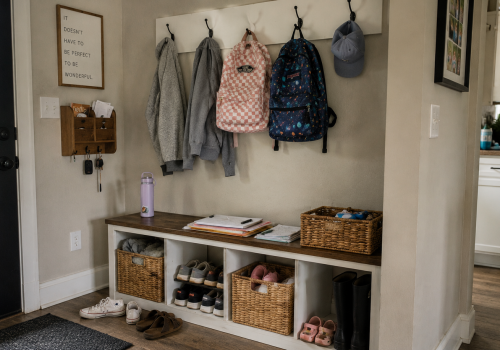
A great example is your entryway.
If shoes, coats, backpacks, and bags regularly end up scattered throughout the house, consider whether your current storage setup is actually convenient for your family.
A few hooks, a shoe basket, and a designated place for bags may be all you need.
The goal of organizing isn’t to create more work for yourself. It’s to make your home easier to live in.
6. Make Your Bedroom a Place That Supports Rest
Sleep and mental health are closely connected, and seasonal changes can affect our normal sleep patterns.
During the winter months, some people find themselves sleeping more than usual, struggling to wake up, or feeling tired despite getting adequate rest.
Although an organized bedroom won’t correct an underlying sleep disorder or treat seasonal depression, creating a comfortable sleeping environment can help support healthy bedtime routines.
Start by taking a look at your bedroom.
Does it feel like a place where you can relax, or has it become a storage area for laundry, paperwork, and miscellaneous household items?
Consider making these adjustments:
- Clear your nightstand of unnecessary clutter.
- Keep frequently used bedtime essentials within reach.
- Remove work-related materials from your sleeping area when possible.
- Establish a designated location for laundry.
- Use comfortable bedding appropriate for the season.
- Keep your bedroom dark, quiet, and comfortably cool at night.
- Create a consistent evening routine.
You might also consider reducing bright overhead lighting as bedtime approaches and using a bedside lamp instead.
Your bedroom doesn’t have to look like something out of a magazine. It needs to function as a comfortable place where you can rest.
7. Make It Easier to Get Out of the House
When it’s cold outside, the sun sets early, and your energy is low, leaving the house can begin to feel like a chore.
But maintaining social connections, spending time outdoors, and participating in enjoyable activities can be important parts of supporting mental well-being.
One way to make those activities feel more manageable is to eliminate unnecessary obstacles before they happen.
Consider creating a convenient area near your primary entrance where you keep the things your family needs when heading out.
Depending on your household, that might include:
- Coats and jackets
- Shoes and boots
- Hats and gloves
- Keys and sunglasses
- Children’s backpacks
- Dog leashes
- Frequently used outdoor items
If you have young children, consider placing their everyday shoes and jackets at a height they can reach independently.
You can also prepare for the following morning by gathering what you’ll need the night before.
When everything has a designated place, getting out the door can require fewer decisions and less searching.
Of course, organization alone won’t create motivation or eliminate symptoms of depression. But removing some of the practical frustrations associated with leaving home can make everyday routines easier.
A Gentle Reminder: Your Home Doesn’t Have to Be Perfect
There’s something important we want to emphasize.
If you’re struggling with seasonal depression, low energy, or feeling overwhelmed, having a messy home doesn’t mean you’re failing.
Life happens. Families get busy. Responsibilities pile up. And sometimes, maintaining a home is genuinely difficult.
Organization should never become another source of pressure or unrealistic expectations.
Instead, think of it as a tool that can help your home function better for the life you’re actually living.
You don’t need to declutter every closet, reorganize every cabinet, or create an entirely new household routine.
Start with one small change that would make tomorrow a little easier.
Maybe that’s clearing your kitchen counter tonight.
Maybe it’s preparing a basket of easy breakfast options.
Maybe it’s finally establishing a place for the shoes that always end up in the hallway.
Whatever it is, let that be enough for today.
When Seasonal Changes Affect More Than Your Home
While making your home more comfortable and functional can support everyday well-being, it’s important to recognize when additional help may be needed.
Seasonal affective disorder is a recognized form of depression that can affect mood, energy, sleep, appetite, concentration, and daily functioning.
If you’re experiencing persistent sadness, loss of interest in activities you normally enjoy, significant changes in sleep, or difficulty managing everyday responsibilities, consider speaking with a healthcare professional.
Treatments for seasonal depression may include psychotherapy, light therapy, medication, and other approaches recommended by a qualified professional.
Your mental health deserves the same attention and care as your physical health.
A More Comfortable Home, One Small Change at a Time
As we move into the colder months, remember that your home should be a place that supports you, not another source of stress.
Sometimes the most meaningful improvements aren’t dramatic transformations.
They’re the little things that make mornings run more smoothly, evenings feel more peaceful, and everyday responsibilities easier to manage.
At OWL Professional Organizers, we believe that thoughtful organization is about much more than creating beautiful spaces. It’s about helping individuals and families establish functional homes that better support their everyday lives.
And whether you tackle a project yourself or ask for a little extra help, every step toward a more manageable home is worthwhile.
Here’s to creating spaces that make life a little easier, no matter the season. 🤍
Sources & Further Reading
- National Institute of Mental Health — Seasonal Affective Disorder
https://www.nimh.nih.gov/health/publications/seasonal-affective-disorder - Cleveland Clinic — Seasonal Depression (Seasonal Affective Disorder)
https://my.clevelandclinic.org/health/diseases/9293-seasonal-depression - Mind — Tips for Coping With Seasonal Affective Disorder
https://www.mind.org.uk/information-support/types-of-mental-health-problems/seasonal-affective-disorder-sad/tips-for-coping-with-sad/ - UW Medicine — 6 Tips to Declutter Your Home and Help Your Mental Health
https://rightasrain.uwmedicine.org/life/leisure/cleaning-and-mental-health